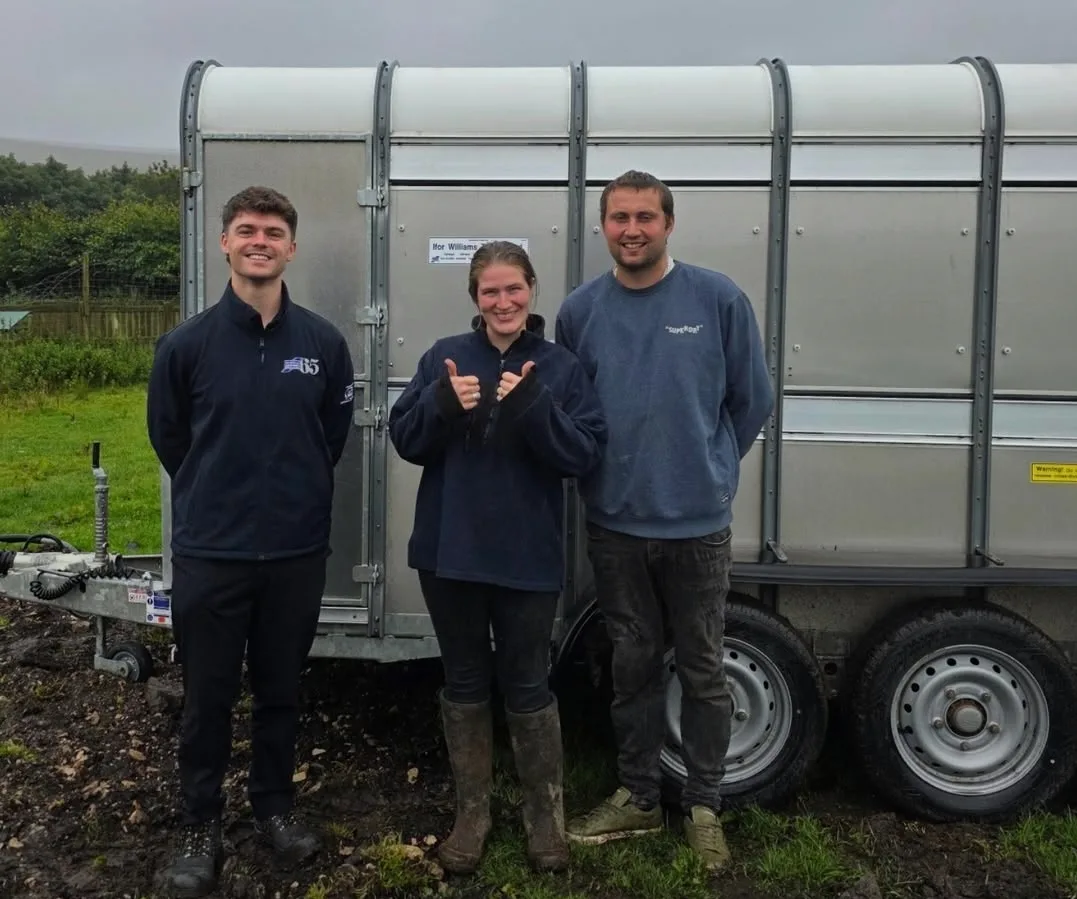
The quad bike broke.
On a 550-acre hill farm in Lancashire, with another two thousand acres of open fell above it, that is not an inconvenience. It's most of how you get to your animals. A friend of Eden's called Ian suggested she set up a GoFundMe, which is what a lot of people would have done, and which nobody would have thought badly of.
She said no.
"I don't agree with doing a GoFundMe, because we're a business. We should make our own money. That's like a charity situation, or somebody's in a really difficult personal situation. There's nothing to say that other businesses doing it are wrong. It's just — it didn't sit right for me."
So Ian suggested something else. What about a raffle? Put up a prize, let people have a go at winning it, and at least everyone gets something out of it. They raffled a barbecue box. It worked. That was three years ago, and the raffles are now almost a separate business running alongside the meat boxes, with their own customer base and their own rhythm through the year.
I've spent a while now looking at small producers, and I've come to think the interesting ones are rarely interesting because of a technique or a breed. They're interesting because somewhere near the start there's a decision that reveals how the person thinks. That's the decision. Everything else about The Meatbox Family follows from it.
A note before we go on. This isn't a review. I haven't eaten their meat, nobody sent me a box, and no money has changed hands in either direction. I came across a post from Eden one morning and found their story intriguing, so I reached out asking for a little of Eden's time. She came back incredibly quickly and gave me forty minutes of it while packing up a farm. That's the whole arrangement. I’ll be forever grateful to Eden for being so warm and generous with what clearly limited time she has for such things!
Two years looking for a farm
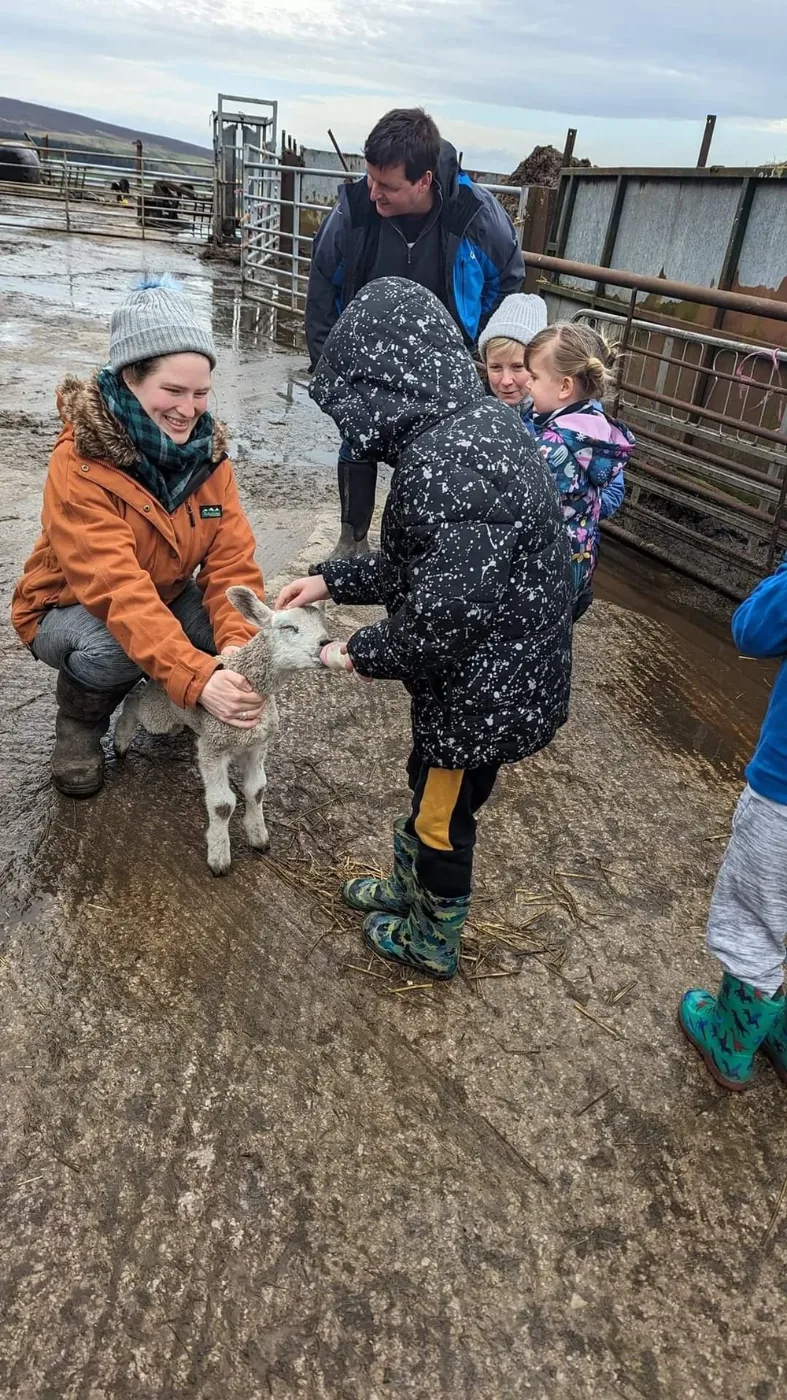
Eden Hill and her husband John are both from Sussex, and both wanted to farm full time. The problem was the same one that stops most people: there was nothing to take on.
"We tried for about two years to find a farm locally in Sussex. Couldn't find any tenancies to take on. We couldn't afford to go and buy a farm."
They were farming already, on what she calls a glorified smallholding — grazing dotted around here, there and everywhere, none of it theirs, none of it stable.
"It was a bit of a logistical nightmare, and nothing was stable. You might have it until it was dry enough for them to have their cows out, or you might have it for three months, or you might have it but you've got to fence it and it's all electric fencing. They could just call you and say, you need to get your sheep out of there tomorrow."
They wanted an actual farm base. They applied for one tenancy and didn't get it. Then they applied for another, and did.
It was three hundred miles away.
The first year, in which everything went wrong
I asked what the hardest thing was. She didn't pick one.
"Everything went wrong. We had a barn fire — all our hay and straw caught fire in the barn. We had tups firing blanks. Then the ones that did get in lamb, we had campylobacter, which the sheep had caught, we think, from the wild birds. It made most of them abort their lambs, and have weak lambs."
Then the arithmetic, which is the part that stays with you. Fifty ewes were due to lamb early. They should have scanned at around 200 per cent, so a hundred lambs.
They got ten.
On top of that, the cost of living crisis arrived and put roughly thirty per cent on the price of everything. "You do all your profit and loss accounts and business plans, and we put a little bit on. But we didn't quite expect thirty per cent increase in pretty much everything."
And underneath all of it, the learning curve — because hill farming and lowland farming are, in her words, two very different ball games. Not much of the original business plan survived.
One thing did go better than expected, and she raised it without prompting: the neighbours. "We had fantastic support from neighbours. That was an amazing thing that happened, that we weren't expecting."
The sheep that know where they live
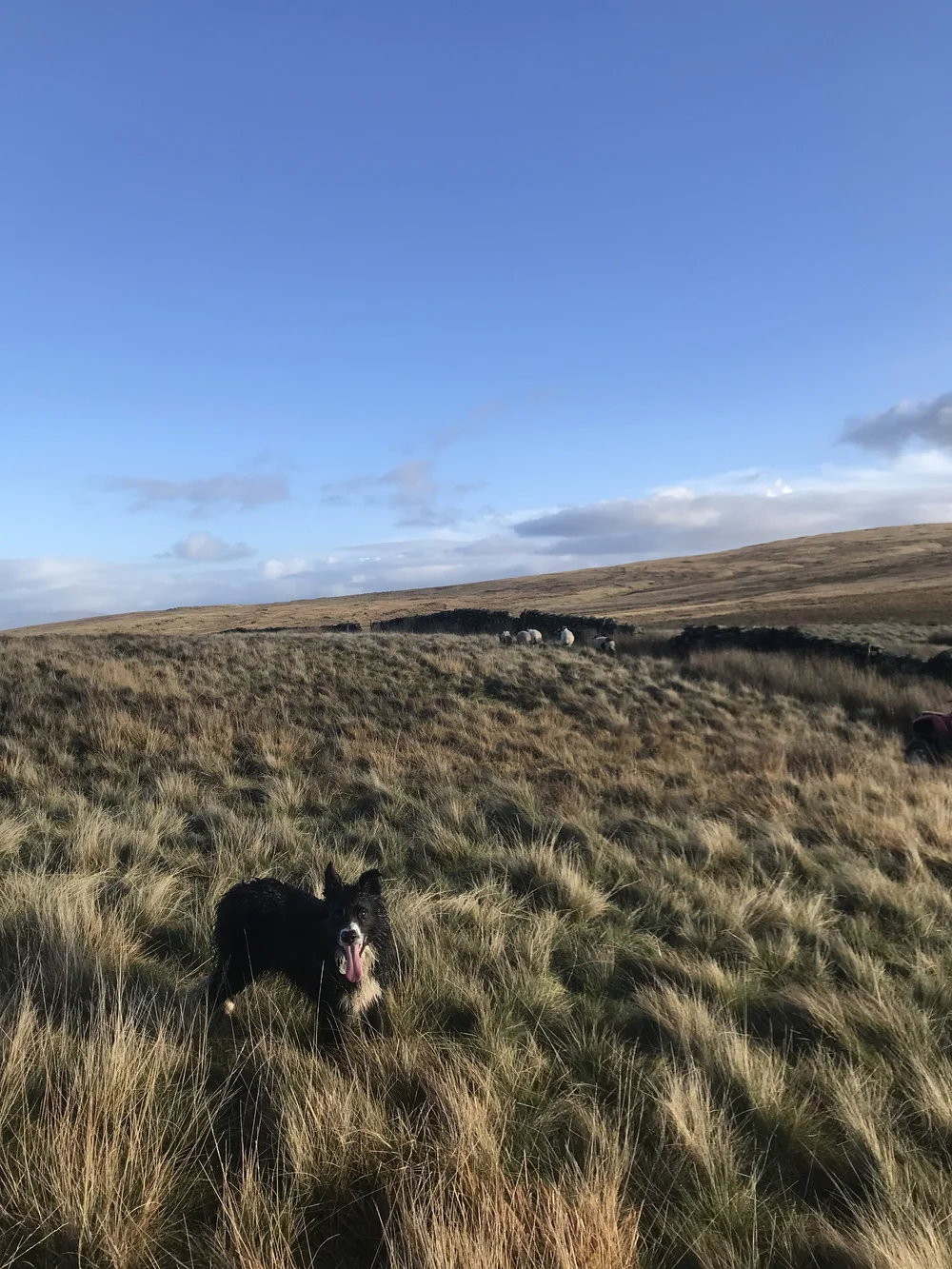
Their website has a line on it that I couldn't stop thinking about. The fell is shared by several farms. There are no fences separating one farmer's sheep from another's. The sheep simply stay where they should.
I asked how that works, expecting it to be something they manage.
"You train them to be hefted. It just takes a long time."
Hefting is a real and old thing, and it's the reason hill flocks tend to stay with a farm when it changes hands — the knowledge of a particular hill lives in the animals rather than in the farmer, and it can't be quickly re-taught. When they moved up, they brought fifty of their hardiest Sussex sheep with them.
Of those fifty, about two are left.
Going the other way is easier. Sussex is fields and paddocks and stock fencing. Up here, she says, the biggest field is 140 acres, the walls and fences between that and the ninety-acre field next door are down, and beyond that is two thousand acres of fell. "They just do what they want, when they want, up here."
What breed? Everything.
Their site names Belted Galloway, Angus and Hereford among the cattle, which had me expecting a considered answer about breed characteristics. What I got was better.
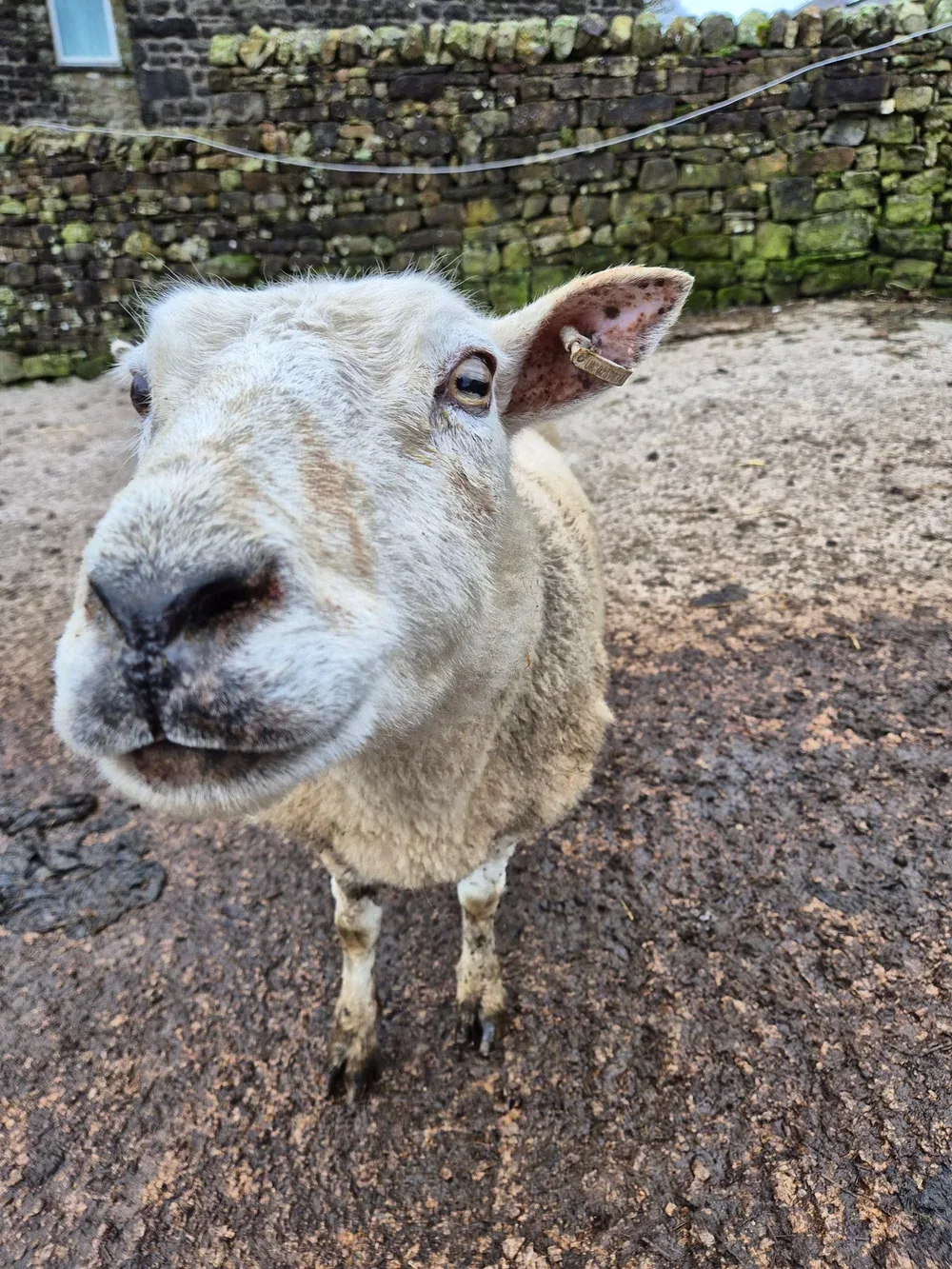
"Oh, everything. We don't have a particular breed."
Same for the sheep. Same for the pigs. And this isn't casualness — it's a deliberate commercial position, and she explained it more clearly than most people explain their business models.
"We don't stick to a breed because we sell it to the public. We just have to be able to sell it. If we lose all of our customers, we need to still be able to sell it in the auction. We've always just farmed in a way that we're happy with the animals — they have good growth rates, they're happy, they're healthy, they're easy to manage. I don't want to farm to tick a box to say we only sell pedigree Aberdeen Angus, because if one day Aberdeen Angus cattle are ridiculous money, then we've built a business that is no longer viable."
The same logic runs through their position on organic certification, which they state plainly on their own website and which she was equally direct about.
"I don't want to be trying to farm to tick a box. All it's going to do is make our customers have to pay more. A lot of people come to us and say, are you organic? And I say no — but none of our meat contains antibiotics, because that's the legal standard in the UK, and it doesn't contain growth hormones, because they're completely banned in the UK. And most people will still go on and buy, even though they came to us looking for organic."
Her point is that most people asking for organic are really asking a different question — they think non-organic means antibiotics and hormones — and that the honest answer serves them better than the certificate would.
"I'd rather just say what I actually do."
How the raffles actually work
Worth being precise here, because the word raffle is doing some heavy lifting.
"It's technically a competition-based prize draw. It's not technically a raffle, because they have to answer a question and they have to get it correct."
There's also a free postal entry route, which is the other thing the law requires. They used to run everything through a hosting platform that handled that side; they've since moved to running it themselves, using a company that specialises in building competition and prize draw sites.
"It is a bit of a minefield. You have to be really careful."
The two halves of the business turn out to balance each other through the year. At Christmas, meat boxes dominate and the raffles go quiet. When it's hot, the raffles pick up and the boxes slow down. And right now, mid-move, they're leaning on the raffles deliberately — she doesn't want to sell meat boxes too far ahead when the farm is about to be packed into lorries.
The customers aren't the same people, either.
"There's some people that would never buy a meat box from us, but they enter every raffle."
She also mentioned, almost in passing, that plenty of other producers have tried the same thing and given up within a month or two. She doesn't know why it works for them and not for others. My own guess, for what it's worth, is that it isn't really a mechanism at all — it's her, doing it relentlessly and enjoying it. This is a woman who filmed a Michael Jackson cover to get attention for a meat business. "There's nothing that I won't do to try and get the word out there."
The thing that sells out every week
I asked what's underrated — what people don't order and should. I was expecting the usual answer about cheap cuts nobody appreciates.
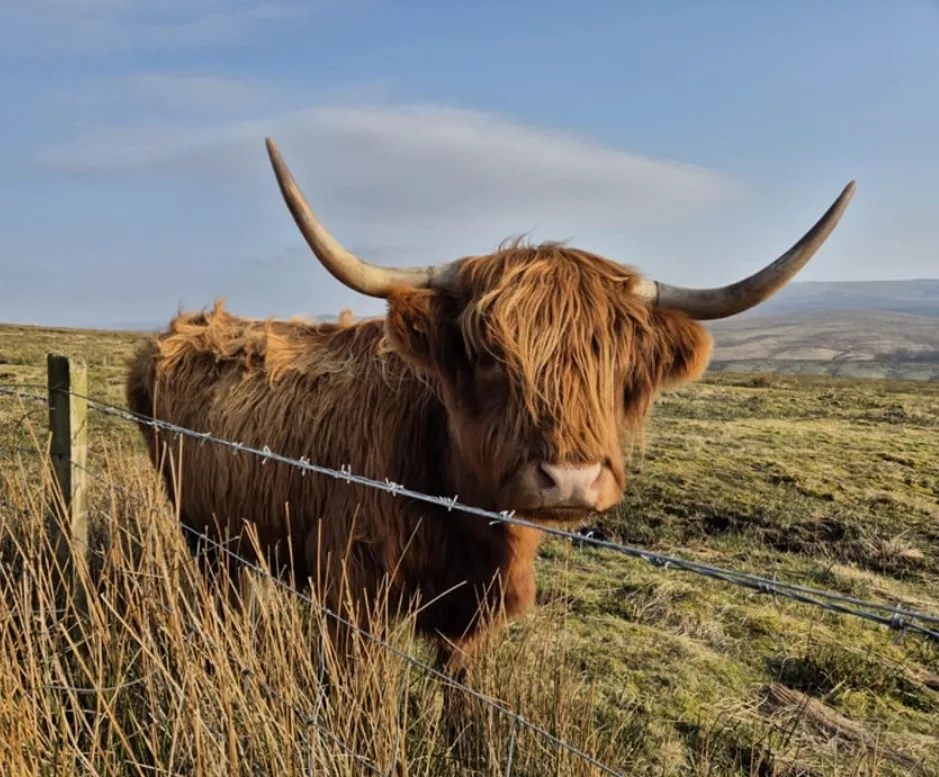
"Venison, and mutton. But in terms of actual cuts — most people would say offal, or bones. But we sell all of our offal every single week without fail. That's one of the first things to sell out on our website."
Bones for stock are, by her reckoning, the second biggest individual product they sell. Only mince beats it.
Offal is the fifth quarter — the old butcher's term for everything that isn't the four quarters of the carcass — and it is supposed to be the stuff nobody wants. In a national conversation where we're forever being told the British have lost the ability to eat anything but chicken breast and mince, a small farm in Lancashire sells out of liver and kidneys every single week, and shifts more bones than steak.
That is a better argument for buying direct from a producer than anything I could write.
There's a counterpart to it that I liked even more. I asked what she eats.
"My favourite is a sirloin beef roasting joint. If the budget allows — which it doesn't usually, because normally we have to actually sell it."
Sirloin is the one they're most likely to have left over, she explained, not because it's unpopular but simply because there's more of it on the animal than there is fillet.
"We never have fillet leftover. I think I've had one fillet steak in my life, and it wasn't even my own."
They eat their own meat, otherwise, across the board. The single exception is chicken, which they buy in and which she is faintly embarrassed about. "It feels criminal to buy meat." They keep a couple of hens for eggs.
The part nobody trains you for
I asked about best days and worst days, expecting a story. What I got first was a correction.
She'd been asked the same question a few weeks earlier, on a panel of farmers at Meat Up Festival, and the panel had converged on the same answer.
"The best days are the days that you don't even notice. Where nothing's gone wrong. Everything's just kind of teetered along and done its thing."
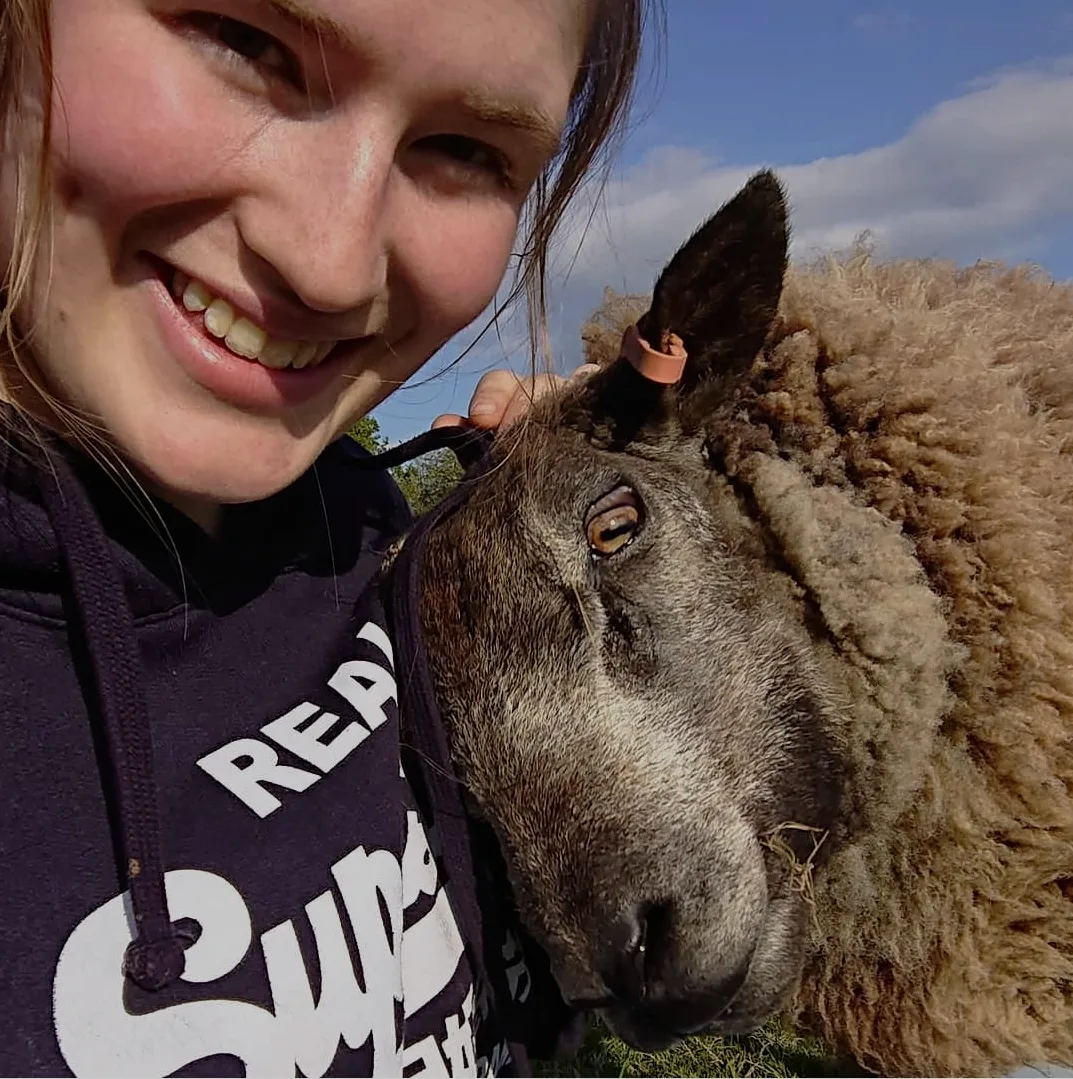
The successes, she says, are nearly always the far side of something going badly. Her example: a ewe delivered a lamb so fast that Eden walked into the barn to find it still inside the sack, and assumed it was dead. It wasn't. It was breathing terribly and doing very little. They worked on it for hours, clearing its airways, and eventually it got up and walked.
She was livestreaming on TikTok at the time. "This is my job, and we were lambing live, so I couldn't avoid it."
Then the worst days, which she listed the way she listed the first year — flatly, one after another. The barn fire. All of her meat rabbits dying. The ewes aborting their lambs. A pet sheep called Houdini, who had turned up on a building site across the road years before and effectively chose her, and who died last year at nine and a half. A goat that drowned in the slurry lagoon.
"With animals, there's no way of stopping them from doing animal things. We try so hard, and it feels like a failure — and it is, in some respects, where you feel like if only we had done this, if only we had done that. But you can't stop them. We do try and prevent it, and we succeed most of the time. But sometimes they're just a little bit more determined to off themselves."
That last line is the sort of thing farmers say, and it's tempting to hear it as hardness. I asked whether you get numb to it, which in hindsight was a slightly lazy question, and she didn't accept the premise.
"I certainly don't ever get numb to it. I find it very frustrating. But compassion fatigue is the problem, isn't it? That is what getting numb to it is. And it's not because the farmer doesn't care. It's just that they're protecting their mental health. Like a trauma response."
Then the detail that I think matters more than anything else in this piece.
"I used to work in a veterinary practice, and we used to do training on compassion fatigue, before I was a farmer. But as a farmer, no one's ever mentioned it to me at all. It's not something that is ever discussed."
Sit with that. In one profession, where you deal with sick and dying animals and the people who love them, it is a named thing with formal training attached. In the other, where you raise animals from birth, keep them alive through weather and disease, lose some of them anyway, and then send the rest to slaughter as the entire basis of your income — nobody mentions it.
I don't think that's a gap Eden set out to identify. She said it in passing, as an aside, while talking about a goat. But it's the most useful thing anyone has said to me about farming, and it explains something I've never fully understood about how farmers talk.
Meat Up, the festival where she was asked about her best days, supports the Farming Community Network and the Burnt Chef Project, both of which work on mental health in farming and hospitality, and donates a share of ticket sales. It's worth knowing that those organisations are there. Details at the end of this piece.
What it costs to own it
I asked whether she ever gets to switch off, or take a holiday.
"Yes, to some degree, but not when we first started. We didn't have any money to be able to."
Away, for them, means three or four days. The last time they had a full week was 2023, and that was their honeymoon.
Even then, away isn't really away.
"Not really, because even when we're away, we're still having to get somebody else to do our jobs, and no one ever does it how you want them to do it. It just doesn't happen. And things unfortunately go wrong on a farm every single day. It might be the bucket falling off, or something breaking, or sheep jumping a fence — which in a normal day we just deal with, and that's part of our daily jobs. But when you're away, trying to explain how to fix that problem, or what you'd like done about that problem, it's just so much harder, isn't it?"
She has built the business so that most of it travels. She can run it, she says, almost entirely from her phone. When they went away with friends last year she worked more or less throughout — not the whole holiday, but posting every day, checking that nothing needed doing. Some of it doesn't travel at all: nobody else can do what John does with the booking, the shipping and the printing of labels.
Beatrice, who is two, made a couple of appearances during our call, once accompanied by Gary — a doll thirty-odd years old, hers now, Eden's before that, and her sister's before that again. Nobody minded. It seemed to me like fairly direct evidence of what Eden had just been describing: this is a job you do while also doing everything else, and there is nobody to hand either half to.
Interestingly, Beatrice has made them go away more rather than less. Before her, Eden says, it was simply easier not to bother.
I told her that we have a version of the same thing for an entirely different reason. My daughter Polly is disabled, with significant daily medical and dietary needs, and the practical effect is that we don't hand her over. Not to babysitters, and not to my mother or my wife's parents, all of them local, all of them perfectly capable, and none of whom either of us quite believes would carry it the way we carry it. Nobody has ever refused. We have simply never asked.
Which is, I think, the thing Eden had put her finger on without either of us noticing at the time. It isn't really about farming. It's what happens to anyone whose responsibility can't be delegated — the reason differs completely and the shape is identical. You stop asking, and then you stop noticing that you've stopped asking.
"One day we'll get to go on a proper holiday at some point."
What she's proudest of
"Being open to learn."
"A lot of farmers do what they do because that's what they've always done, and that's something I'm really proud that John and I don't do. We've always been very willing to break the mould and do things differently — and also willing to fail. We get stuff wrong all the time. We'll lose money on stuff, or go, oh, that was a bad idea in hindsight. But it's learning from that and changing."
She was careful not to make it a criticism. "It's not to say that farmers don't do that. But I think a lot of farmers just don't take the risk to be able to make that mistake. I know a lot of farmers that are really struggling, because they haven't made any changes in ten, twenty years, and now they're on catch-up."
I'd note that the willingness to fail is not free. It's much easier to take a risk when you've already had a barn fire, a disease outbreak and a thirty per cent cost increase in your first year and survived all three.
Going home
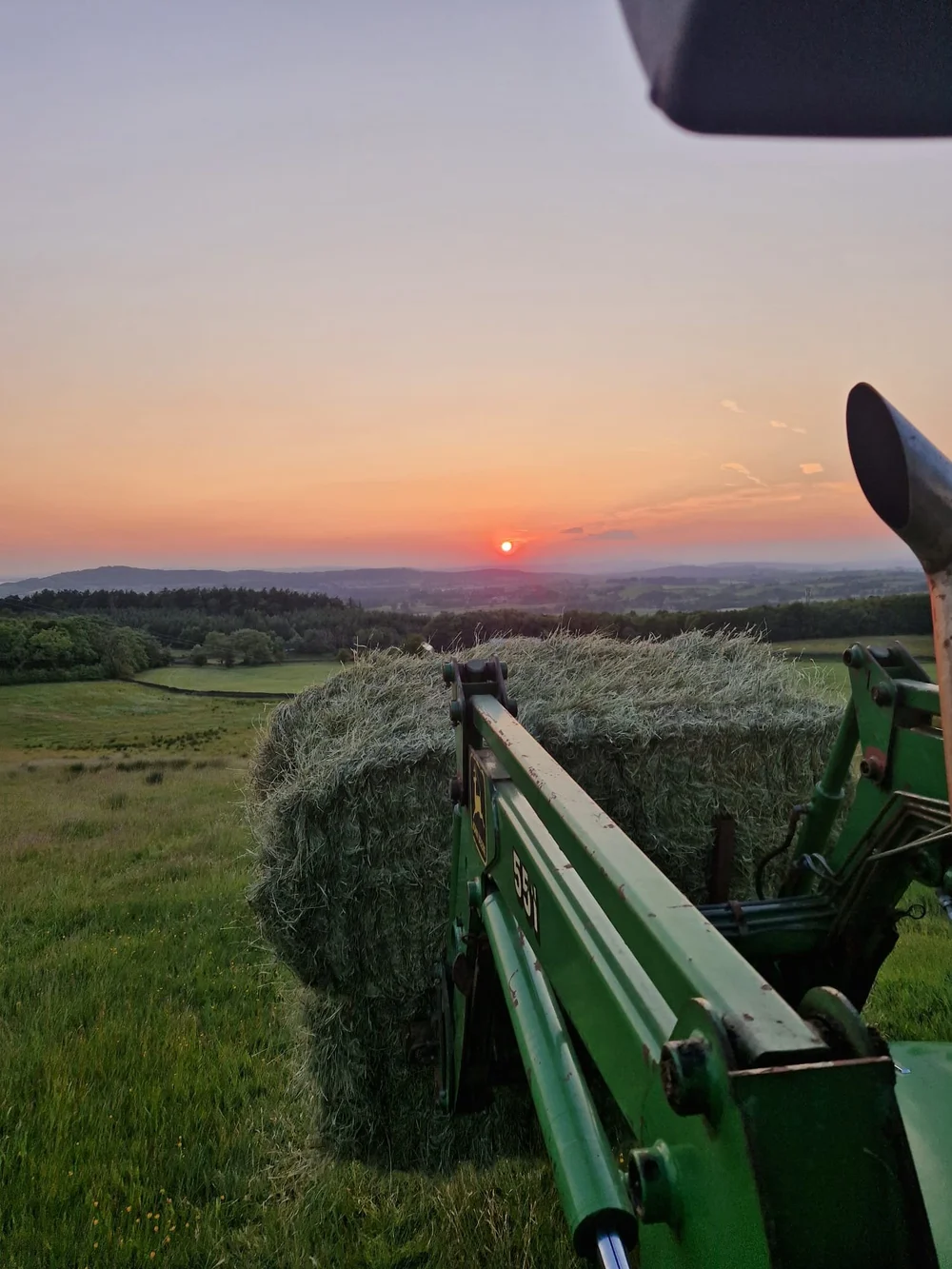
They're moving back to Sussex. The reason is not complicated.
"Just going back to family. Just back to family."
They'd have been happy to stay, she says, but decided they didn't want to. The farm is going altogether; the animals are going with them. They won't find anywhere the same size, and don't need to — the grazing quality up on the fell is poor, and with better grass in the south they reckon they could manage on perhaps a third of the acreage and keep the same number of animals, possibly more, because they'd be able to keep them outside over winter.
What will she miss? Two things, and neither is the one I'd have guessed.
The first is the summer, of a very specific Lancashire kind. It rains, which is horrible in winter — "really wet and miserable and awful" — but means that in August there is still green grass. "We have lovely green grass fields at the moment, whereas not many other places in the UK do right now. Certainly not in England."
The second is harder to put a finger on, and she said so.
"I'll also miss the fact that it is so agricultural in Lancashire compared to Sussex. It's a lot more — I don't know what the word is — a lot more urban, isn't it, and consumerism based, in the South East compared to the North West. So I'll miss that as well."
"Do it scared"
I'd asked her what advice she'd give another producer trying to build the kind of following she has. The call dropped before she could answer it, so she sent it later, as a voice note, and it came back faster and with more force than anything else in the conversation.
"My suggestion is social media. Just post on social media. Do it. Do it scared. Do it nervous. Do it where you hate your voice. Do it where you hate your face. It doesn't matter. Just do it — because no one will know that you exist if you don't talk about what you do."
And then:
"No one is judging you as much as you judge yourself."
She signed off by saying that passion is the biggest driving factor behind most successful things. Then added: "That, and desperation."
I've thought about that pairing a lot since. It's the most honest description of running a small food business I've heard, and it's exactly the same instinct as saying no to the GoFundMe. Not a rejection of help. A preference for earning it.
One last thing, which is really about us
myfoody exists to help people find independent food producers near them, and it does that by searching for shops you can walk into. Eden hasn't got one. There is no address, no counter, no opening hours — and so, for all her thousand sheep and hundred and seventy-five cattle, she is completely invisible to the thing I built to find people like her.
That hadn't occurred to me until I went looking for her on my own site and found nothing. So we're building a new part of the directory for producers who sell direct with no premises to visit. It'll take a little while, and it'll be a short list to begin with, but it shouldn't have needed a phone call from Lancashire to point out the gap.
The Meatbox Family sell beef, lamb, mutton and pork direct, delivered across England, Wales and Scotland. They have no shop — everything goes out by post — which is precisely why we wanted to write about them. You can find them at meatboxfamily.co.uk and on Instagram, Facebook and TikTok.
This piece was written while they were mid-move, so some details will have changed by
the time you read it.
If anything here rang true and you're farming: RABI runs a free, confidential helpline 24 hours a day on 0800 188 4444. The Farming Community Network is on 03000 111 999, 7am to 11pm, every day of the year. Both are staffed by people who understand the job.