
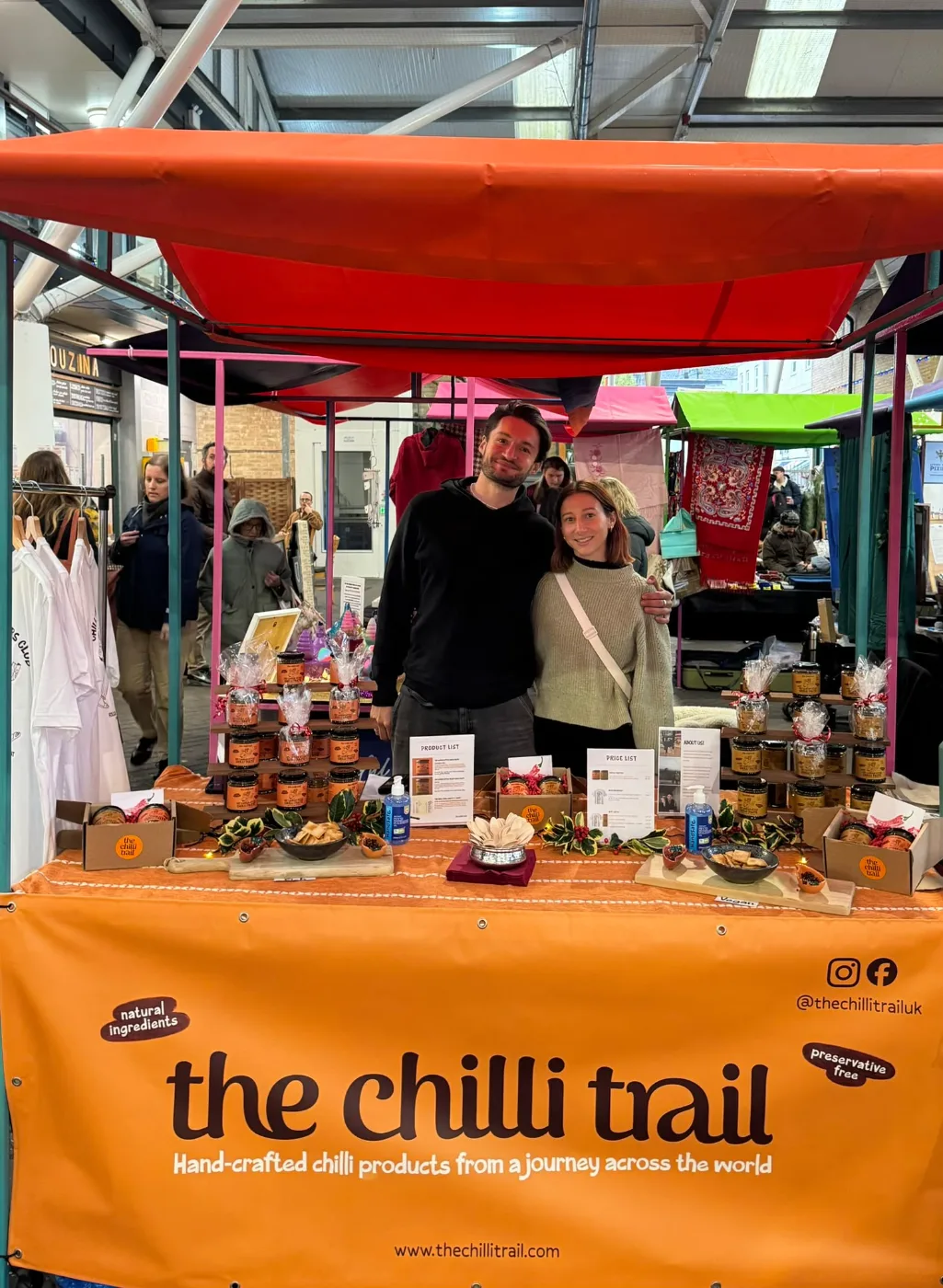
Theo wanted to buy a jar of chilli paste.
He and Harriet had spent five weeks in Sri Lanka, mostly in homestays, because the travelling they like is the kind where you end up in the middle of nowhere, fitting in with however life is going on around you. In one small town, the sort of place people visit for elephant safaris, they stayed with a family whose father had come off his motorbike. He was a carpenter, couldn't work for a few months, and took the two of them under his wing as their tour guide. His wife cooked every meal they ate there, and on the table was a particular chilli paste.
They found versions of it in other homestays and restaurants, and got, in Theo's words, "quite obsessed" with it. Then they didn't think about it again for three or four months.
Two days into a trip through Central America, in Belize, it came back to them. That paste, and all the other chilli condiments they'd eaten that you can't find in the UK.
"I simply wanted to try and buy it when I got back home," Theo told me. A bit of research put paid to that. Nobody sold one here. Importing it from Sri Lanka meant spending a lot of money, and what arrived would be full of additives and preservatives.
So the question became, as Theo put it, "why not try and do that ourselves" — and without the preservatives.
Plenty of people come home from a trip missing something they ate. What interested me about Theo and Harriet is that they didn't wait until they got home to do anything about it. By the time they landed, The Chilli Trail had its branding done and a recipe that had been worked out in hostel kitchens on the other side of the world.
A note before we go on. This isn't a review. I met Theo and Harriet at a food festival in Oxford and tried their paste on their stall, late on the last day, by which point I'd walked past so much chilli that I wasn't sure I wanted any more. Nobody sent me a jar, and no money has changed hands in either direction. We spoke on the phone. Theo said he had about ten minutes, and kindly gave me half an hour.
Before the trail
Before any of this, they'd both spent about five years working in London. Theo started in tech sales and moved into corporate partnerships for a charity. Harriet works in the world of marketing agencies, which, if you've seen their Instagram, will not surprise you.
Harriet, Theo says, was the instigator. They'd talked about going away for a while, and a year or so before they left, they made the decision.
"You know what, we're not getting any younger. This is probably the best time to do it."
Then came more than a year of saving. They sold their furniture, booked a one-way ticket and went, with no intention whatsoever of starting a business.

South America was the main event. Japan, New Zealand and Australia were bolted on after it, and then they kept extending: the Philippines, then Sri Lanka. They came home for four weeks in the middle, because Harriet's mum was turning sixty and had rented a house to celebrate. Then, with a little money left, they flew back out for three more months in Central America. That was the trip that started in Belize.
A business built on the road
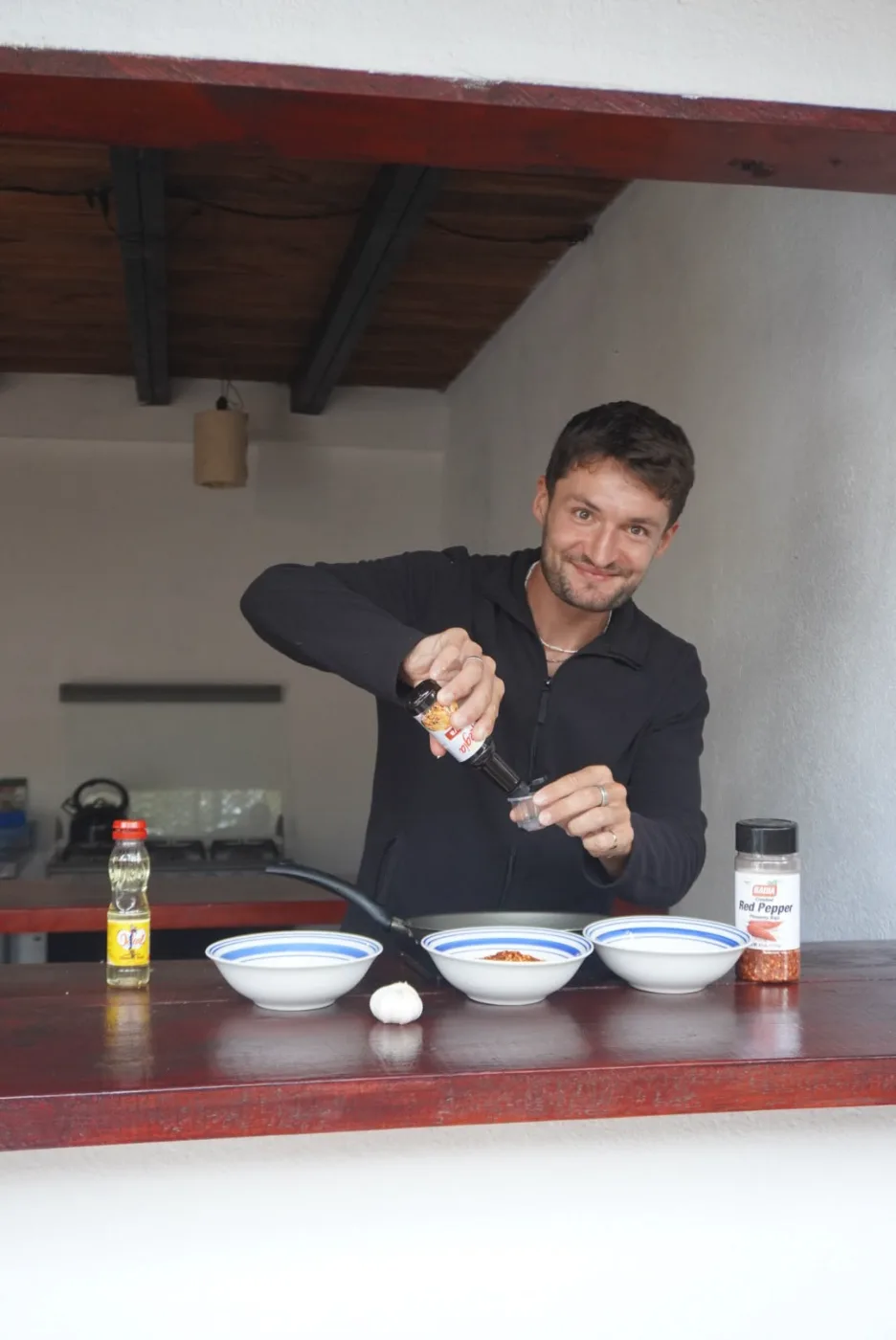
They spent the rest of Central America still travelling, but building the business as they went. They worked with a graphic designer on their logos. And Theo, who is in his own words "the chef", got to work on the recipe.
"I was literally in hostel kitchens working on the recipe for the chilli paste."
He made six, seven, maybe eight test batches while they were still on the move, and asked whoever would try them what they thought. By the time they got home, the branding was finished and the recipe was nearly settled. He spent another three weeks refining it, and they launched right at the end of November, in time for Christmas.
That was ten months before we spoke.
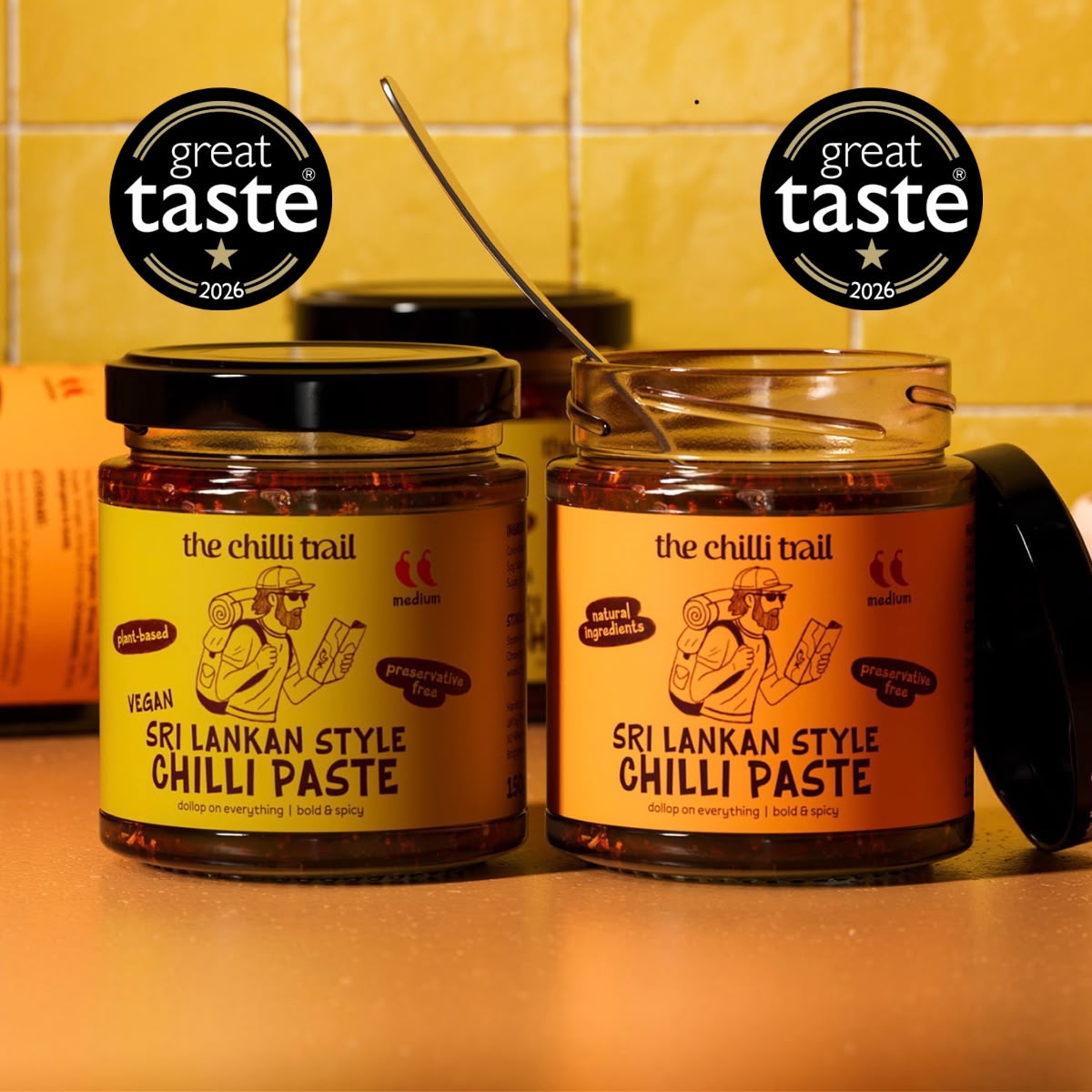
Both pastes, the original and the vegan one, have since won a Great Taste award.
Blind confidence
I asked whether friends and family had thought they'd lost their minds. Theo says the people who know him know he's fairly tenacious, but he suspects most of them assumed it would be "a bit of a side hustle", a few jars here and there.
It isn't. By his estimate they've made around 6,500 jars in those ten months.
Was there ever a moment when it felt like a terrible idea? His answer was that, from the get-go, they'd had "blind confidence", and then he explained why that's less reckless than it sounds.
"We've never done this before, so therefore we don't know what is bad, what's good in terms of progress."
I've thought about that more than once since. Most of the ways people talk themselves out of starting something depend on knowing what normal looks like: how slow a first year usually is, how often these things fail. Theo and Harriet didn't know any of it, so they threw themselves in.
The hundred jars
Their website says they sold out in the first 48 hours, selling more than a hundred jars. It's the number that gets repeated, I repeated it too, and I asked whether they'd had a hundred ready.
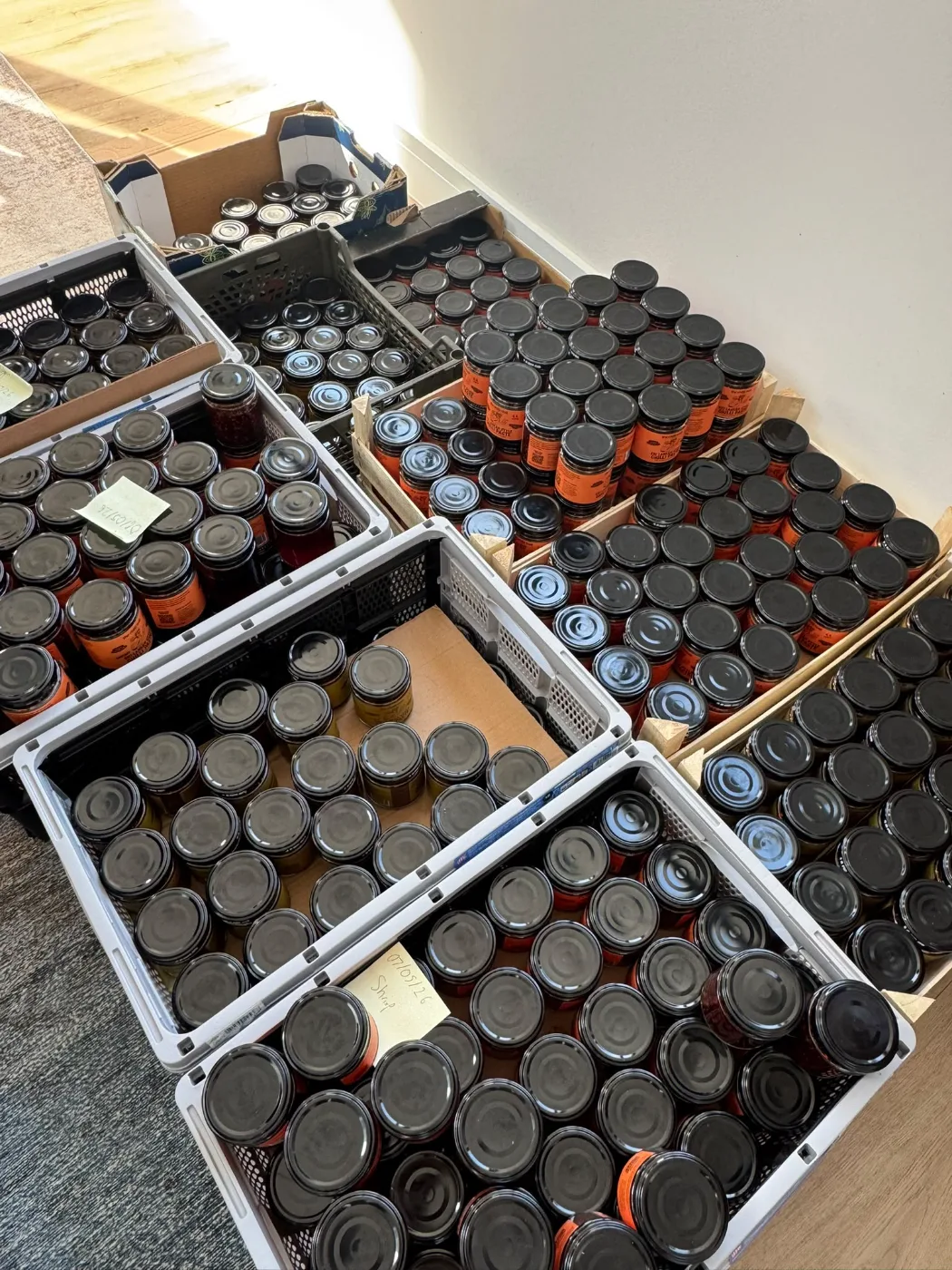
They hadn't, quite. And Theo was straightforward about who bought them: "a lot of these were our friends and family."
What he wanted to talk about was what's happened since. The people buying now are complete strangers, and plenty of them come back for more. The night before our call, they'd had a lovely review from someone they'd met in Bath.
"It's just quite surreal," he said. "It's certainly not what we expected."
I think that's the right thing to be pleased about. Friends and family buy a first jar for all sorts of reasons. A stranger in Bath who takes the trouble to write a review, and people who come back for a second jar, are the business.
Six markets a month
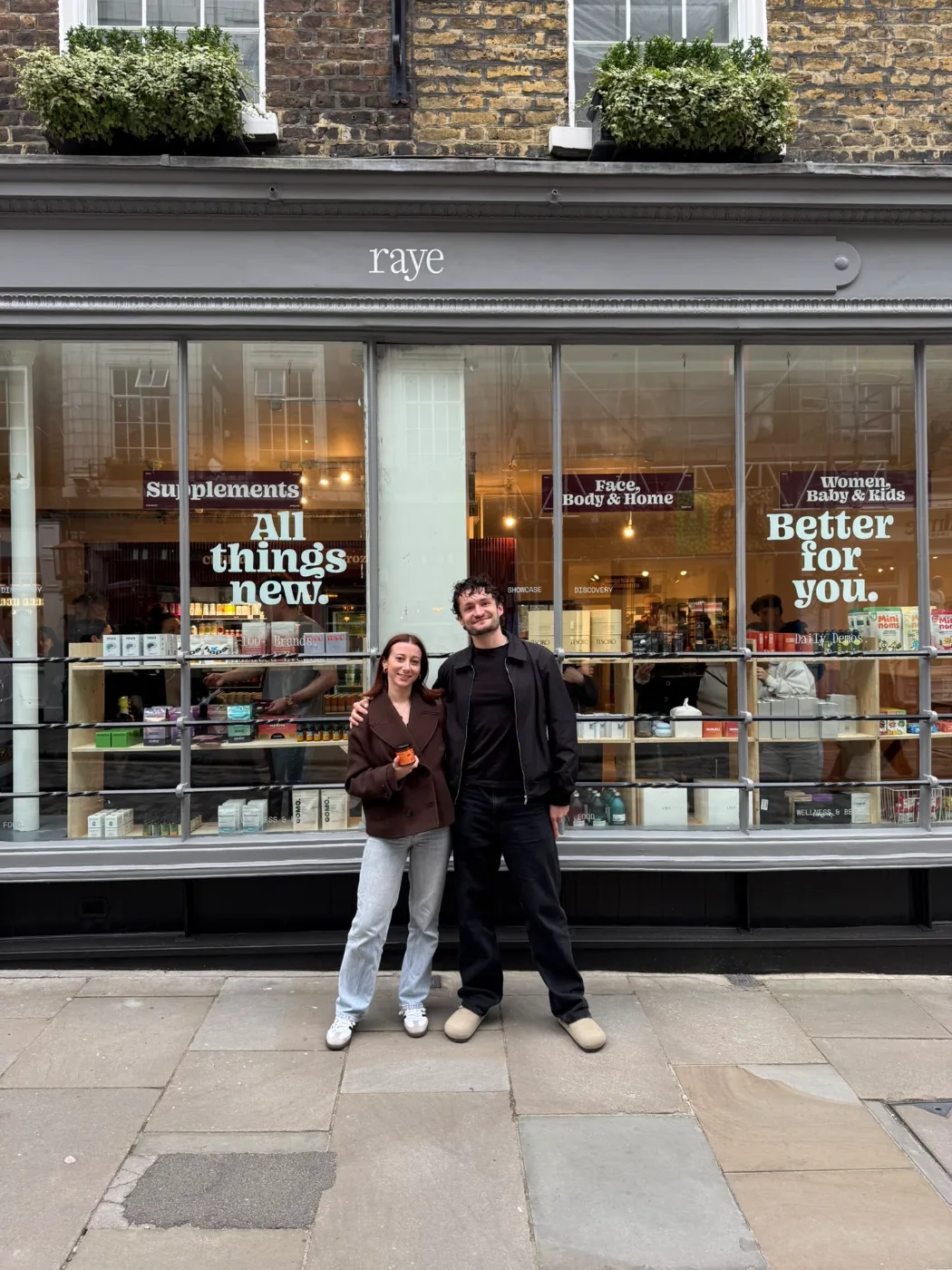
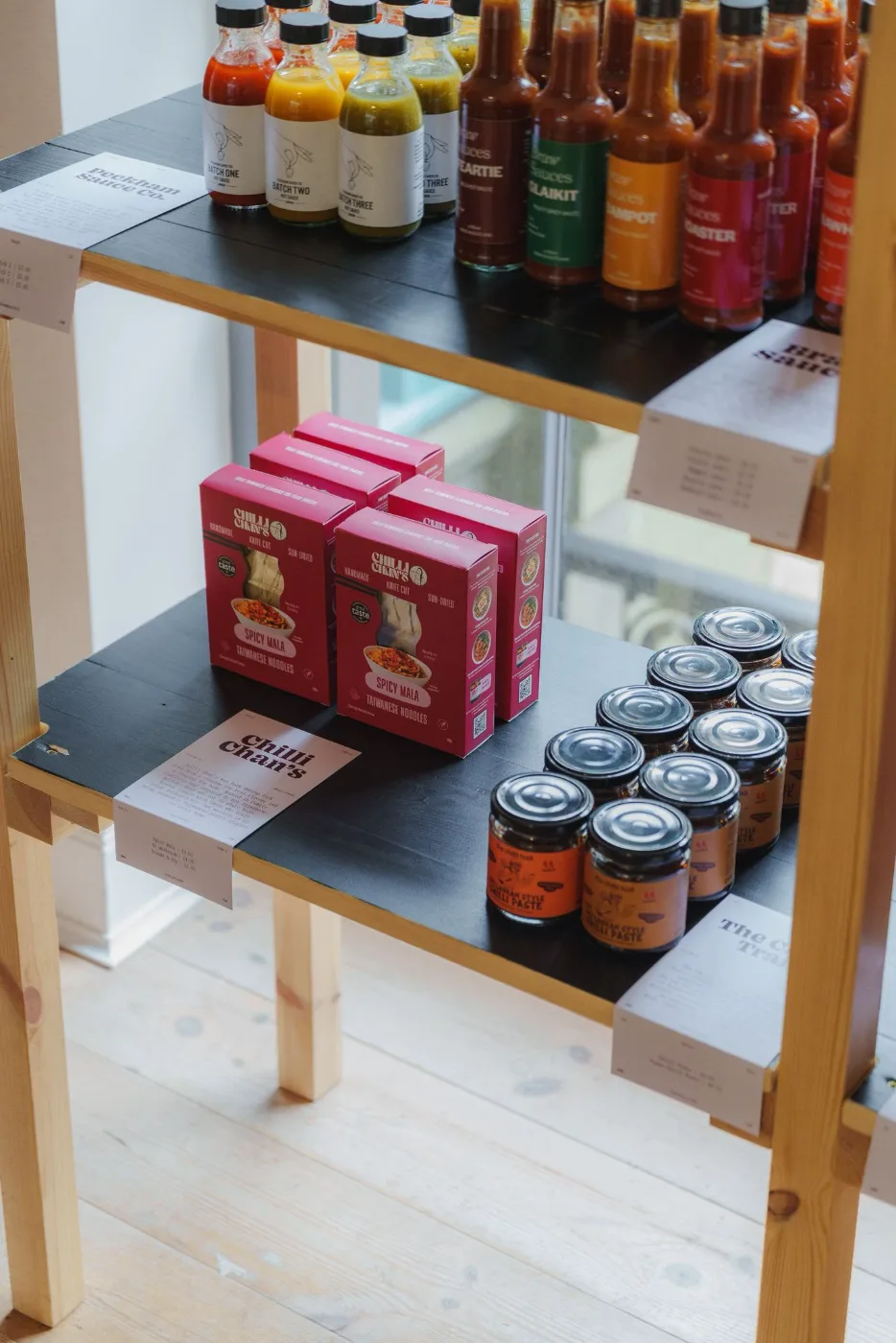
The early growth didn't come from the website. It came from markets, where Theo reckons he does about six a month, and from word of mouth spreading out from them. There are online sales and stockists too, Selfridges among them, and the stockists are Theo's department.
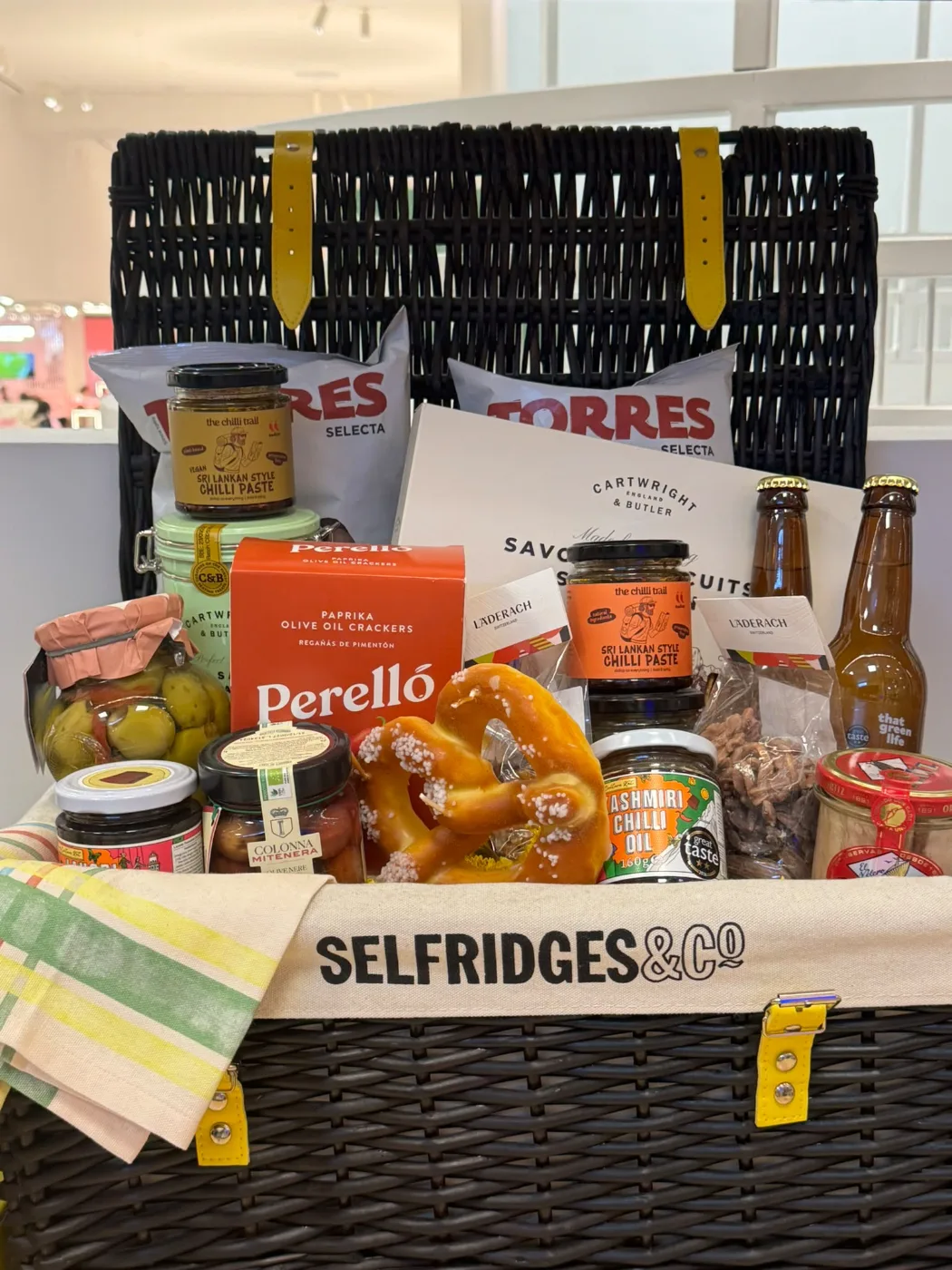
That's where the tech sales comes in. Finding stockists is mostly pitching: "reaching out, prospecting, sending samples", hoping they like it, and starting with an order. It's what he was used to. He spent about four years in tech sales before realising that, if he stayed, that was the rest of his life, and moved into the charity world instead.
I recognised the vocabulary. I've spent more than twenty five years in IT sales for the same company, and I said to Theo that it's one thing selling software auditing tools and quite another selling something you've made yourself and are proud of. He agreed. They make, label and stamp every jar themselves, and he says it's really nice when someone then buys one.
The jar that comes home again
The detail from our call I keep coming back to is about shelf life.
They've tested the paste to twelve months. Theo reckons it would actually last about eighteen, but he's happy to stand behind twelve.
At a market, that matters more than it sounds. Sometimes they're pitched next to cake stalls, whose stock has to sell within a couple of days. Whatever The Chilli Trail doesn't sell simply goes home and gets sold the following week. It's "a really nice advantage", Theo said, and one they hadn't even thought about until they started.
For a stall selling something perishable, a quiet Saturday is stock in the bin. For one that can take everything home again, it's a lost day and nothing more. I'd guess that's a good part of why six markets a month is survivable for two people who have, until now, also had other jobs.
There's a small irony in it, too. The whole thing started with a paste Theo couldn't get without preservatives. The one they make has none, and keeps for a year.
"Babies with it all"
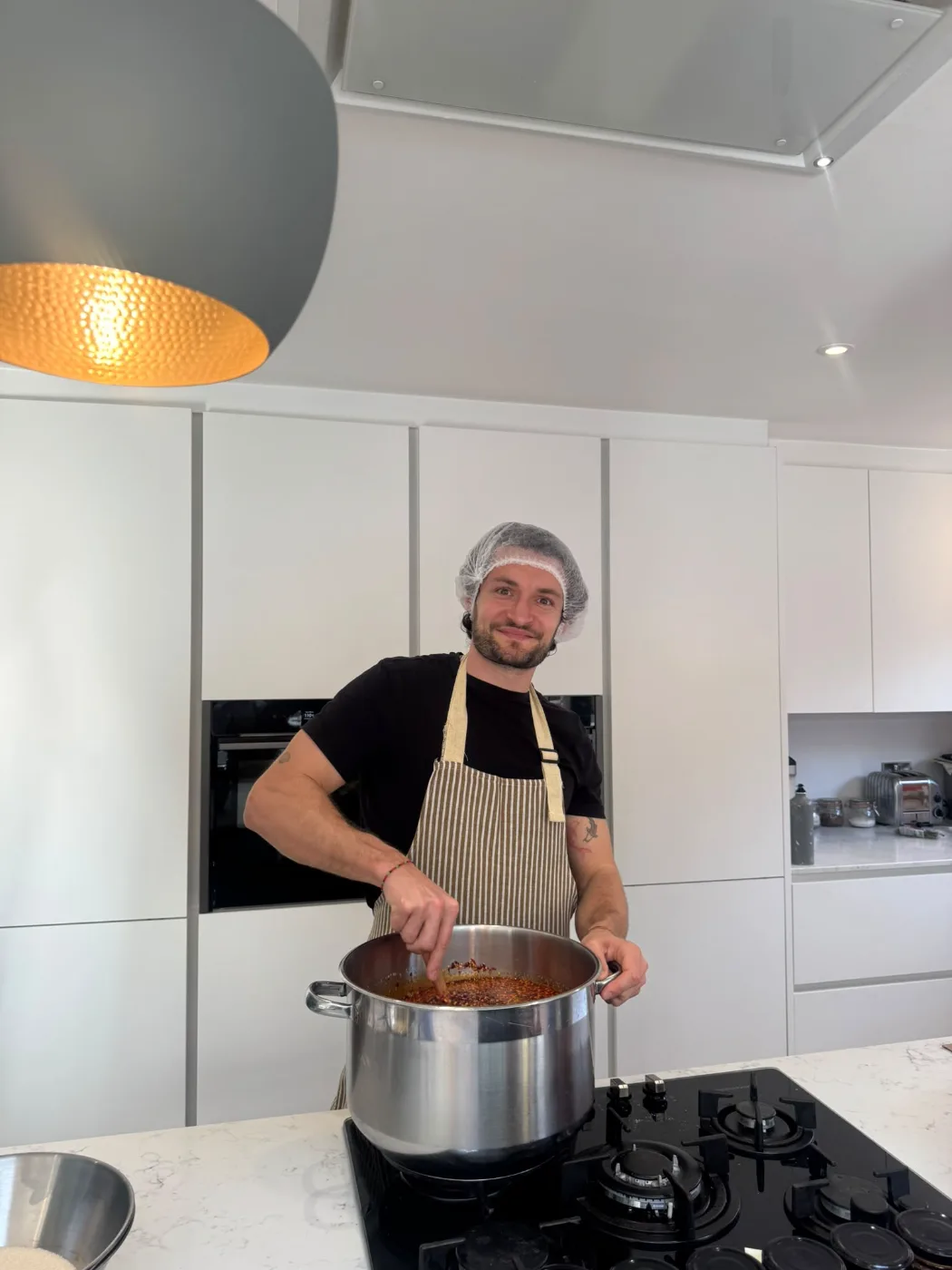
Every jar is still made in a home kitchen in Brighton, including the ones on the shelf at Selfridges. I asked whether there was a plan to move out.
"We're still quite small," Theo said. "We're kind of babies with it all."
They want to scale, he said, "quite carefully, quickly", and there's a lot of room to grow in the kitchen they've got. He doesn't expect to reach its limit until next year.
When they started, they made about ten jars at a time. Now it's up to a hundred a batch. They'd like to get to two hundred, which Theo thinks is about the most that kitchen can do.
They still make literally everything in-house. Theo was honest that it's a lot of work, and just as clear about what they get back for it: a connection to what they make, and rewards that aren't only financial. He's sure that one day they'll outsource it. Not yet.
This is one of the things I went into the call wanting to understand. Their own website says every jar is hand-crafted in a home kitchen, and on the same page says they're scaling their batches into the thousands. Those two things can sit together for a while. They can't sit together for ever, and Theo knows it. He already has the number where the kitchen runs out.
What I didn't ask, and wish I had, is which part of it they'd refuse to give up when that day comes. It was on my list. It's the question I'd most like to hear them answer.
What it costs
The hardest part, Theo said, is time.
Until now he's been working part-time for the charity and part-time on The Chilli Trail, which is why he has done the operations, the selling and the cooking, and Harriet the marketing and advertising. When we spoke, he'd handed in his notice about four weeks earlier and had three weeks left. Harriet still works in marketing, and does her share in the evenings and at weekends. They hope to both be full-time next year.
Money has been handled with the same care. Early on, while looking for a graphic designer, they were scammed out of about £500, which Theo now calls a good lesson to have learned at the beginning. Do as much due diligence as you can. "Money is very precious."
What was left of their travel money went into the business, and since then, Theo says, "we've been very, very careful about spending money", making sure that whatever they do spend brings a return.
Ask everybody
I asked what they'd tell themselves if they could go back to the start. Theo's answer was something they'd actually done: ask for help.
They came to it completely new, "a blank canvas", and reached out to everyone they knew in the food world with the same question: "How do we do this?" One woman, who runs an established premium butter company, was "quite instrumental in the early doors" on how to run a business, food hygiene, and all the legal requirements. "We had no idea," he said.
The effect, he reckons, was that they avoided a lot of the mistakes other people had already made.
And Brighton, it turns out, is a good place to be new. There's a big food community there, other food manufacturers have been really helpful, and people share information and tips.
His other piece of advice is for anyone thinking of starting a business with their partner: "know what your skill sets are", and divide the work accordingly.
A trail, not a paste
The name was always meant to cover more than one jar. The next product is in development: hopefully a Guatemalan chilli paste, built on the Cobanero chilli, a rare variety grown in the mountains around Cobán. Theo describes it as fruity and smoky. Beyond that, the plan is a few more condiments from the places they travelled.
They're also keen that people know about Extra Cover, the charity they support. More on that at the end.
Three they'd send you to
I asked Theo which small food businesses he loves that aren't his own. He named three.
Savvy Ferments, also in Brighton, who make fermented cabbage that he says is delicious.
Ripe, a cheese stall run by three friends, who were pitched opposite them at the festival where I met them. They "absolutely smash it", he says.
And SB Sauce, who make fermented chilli sauce, which means one of the three businesses Theo recommended is, in effect, a competitor. He had nothing but warm things to say about the person behind it.
I'm going to look them all up.
Getting out early
My dad was a chef, so I grew up around food, and I spent time in professional kitchens myself when I was younger. That was enough to put me off ever wanting to work in one. The hours are brutal and the atmosphere can be worse. But wanting nothing to do with a kitchen and wanting nothing to do with food are not the same thing, and there are more ways in than standing on a line at eleven o'clock at night. Theo, who has worked in a few kitchens himself, agreed.
Near the end of the call I told Theo that I saw a lot of my own story in his, including the part I didn't do. It's easy to get stuck. You've got a family and a house, and doing something for yourself starts to feel selfish, like risking everything. So you carry on, and it's a decent life. Theo and Harriet looked at the same choice about five years into working in London and decided they were going to do something for themselves before life gets in the way and while they still had that choice to make. I told him I thought they'd done exactly the right thing.
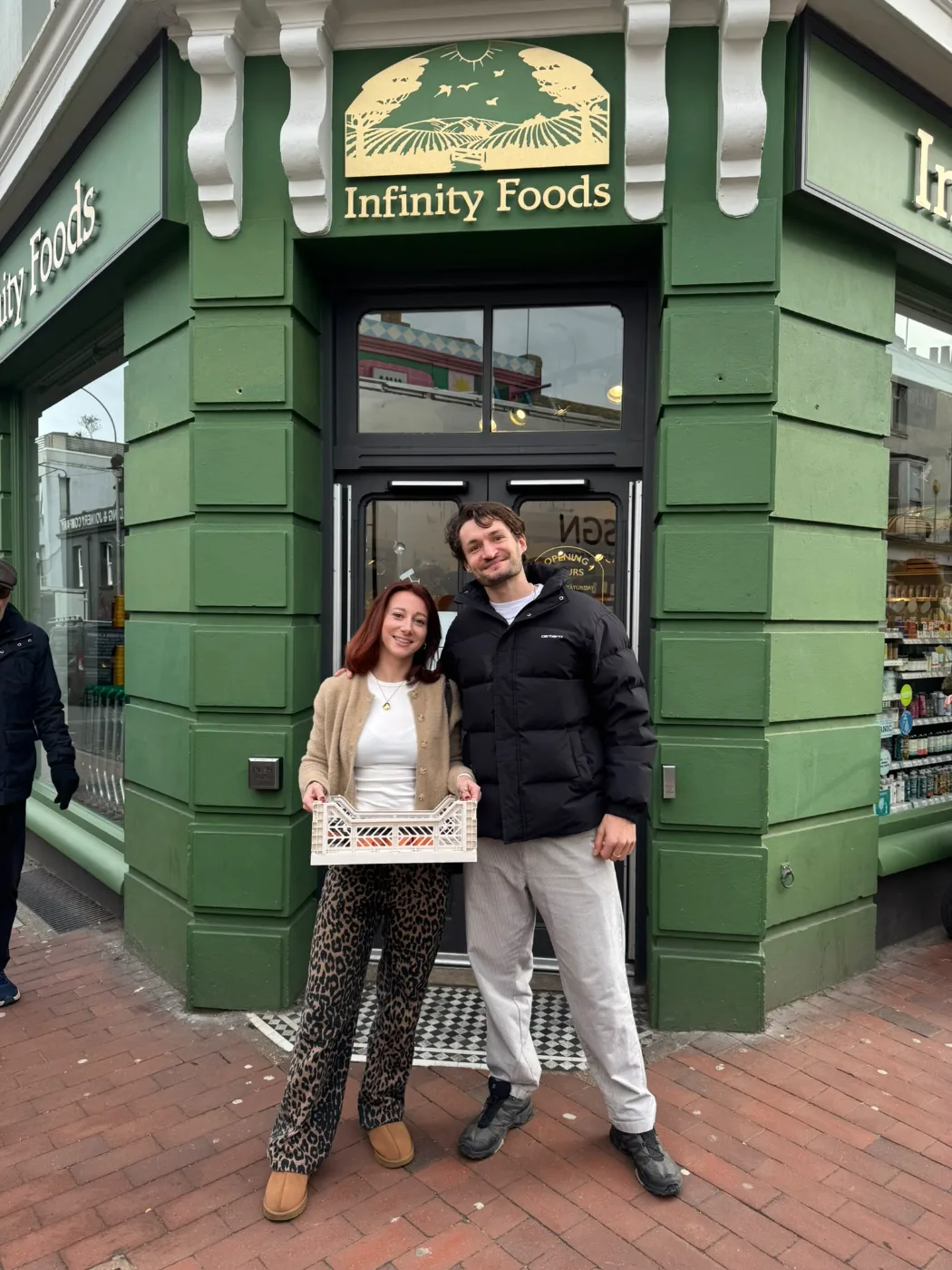
He loves food, he loves chilli, and in three weeks it was going to be his full-time job.
"It's kind of a bit of a dream come true, really."
Where some of it goes
The Chilli Trail support Extra Cover, a UK charity working in Sri Lanka, through a range of merchandise, and Theo and Harriet plan to run a marathon or two for it next year. Given where the recipe came from, that seems the right place for it to go.
Extra Cover provides basic essentials — food, clean water, toilets and textbooks — to twenty-four extremely remote village schools in Sri Lanka's southern rainforest. As funds allow it builds extra classrooms, installs playground equipment, runs tea and cinnamon-growing cooperatives and oversees vocational schools. They describe themselves as having no political, ideological or religious axe to grind: they just want to help children learn and enjoy life.
The numbers on their site are the sort that make you read them twice. Five pounds buys textbooks for a whole class. Ten pounds pays for a day's breakfast for an entire school. Thirty pounds feeds a child for a year. Three hundred builds a toilet, five hundred pays for a well, and five thousand builds a school.

You can find them at extracover.org.uk.
The Chilli Trail make Sri Lankan-style chilli pastes, an original and a vegan version, in small batches in Brighton. They sell online, through stockists including Selfridges, and at markets. There is no shop to visit. You can find them at thechillitrail.com and on Instagram at @thechillitrailuk.
This piece was written in September 2026, ten months after they launched, so the numbers may have moved on by the time you read it!